
Love luck, money luck, career luck, ever wondered what these “lucks” in saju (Korean four pillars) actually are? The key lies in the ten gods (sipseong).
The ten gods (sipseong) are a classification of the relationships between your day master and the other characters in your chart into ten types. What saju calls love luck, money luck, and career luck is, in truth, all sipseong. “Wealth stars are coming in” means the energy of money and results is activating; “officer stars are moving” means the energy of work and relationships is stirring. Grasp just the five big relationships, and the jargon wall of saju content collapses all at once.
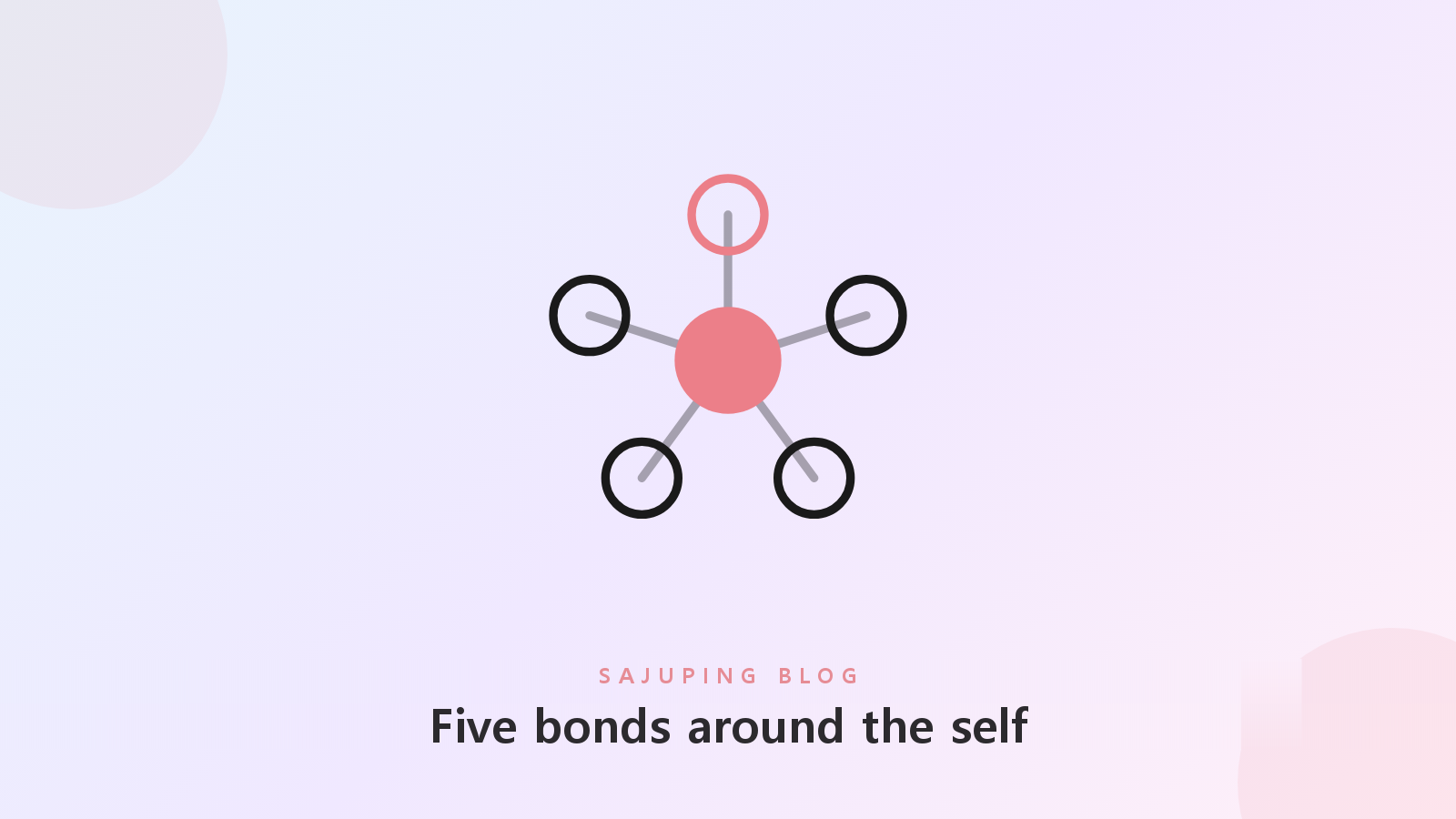
The five relationships: reading with yourself at the center
Taking your day master (you) as the reference point, every other character forms one of five relationships with you. Each relationship divides into yin and yang to make ten (the ten gods), but the right order is to grasp the big five first.
- Companions (bigyeop), energy the same as mine. Siblings, colleagues, competitors. Strong companions mean strong independence and a competitive drive; the homework is knowing when to walk together and when to share.
- Output (siksang), energy I send outward. Speech, expression, talent, creation. Strong output makes you a maker. Expression itself is your energy.
- Wealth (jaeseong), energy I manage. Money, results, practicality. Money luck is precisely a reading of the wealth stars’ flow.
- Officer (gwanseong), energy that manages me. Work, discipline, responsibility, evaluation. This is why job-change luck looks at shifts in the officer stars.
- Resource (inseong), energy that supports me. Learning, documents, the backing of elders. Exam, license, and admission luck belongs to the resource stars.
There is a cycle, too. Companions (me) give birth to output (expression), output creates wealth (results), wealth calls in the officer (position), and the officer leads to resource (recognition and learning), which nurtures me again. The worldly logic of “work becomes money, and money becomes position” lives inside this cycle.
Fortune-telling terms, translated into the ten gods
Here is how the stock phrases of saju content unpack through sipseong.
“Love luck arrives this year”, the character that signifies romance and relationships for you (traditionally the officer or wealth star) comes in as that year’s energy.
“A year when output grows strong”, a year when the energy of expressing and creating expands. A favorable current for job changes, startups, presentations, and creative work.
“Resource luck, so studying goes well”, a period when the energy of learning and documents activates, lending strength to exams and qualifications.
Once you know it is all the same grammar, you can see the structure in any fortune column you read.
Your abundant ten gods become your disposition
Which ten gods are abundant in your chart forms a major axis of your basic disposition.
Many companions: someone who gets things done on their own strength. Many output stars: an expressive person. Many wealth stars: someone who speaks through results. Many officer stars: someone who shines within a system. Many resource stars: someone who learns and reflects. When weighing a weak or strong day master, the comparison of “supporting energies (resource, companions) against expending energies (output, wealth, officer)” also rests on this classification.
Of course, more is not better, and none is not bad. An abundant ten god is both your foundation and your overheating point, and a missing one is both a clumsy area and a direction for learning.
Frequently Asked Questions (FAQ)
Q. Are some of the ten gods good and others bad? No. All ten are necessary functions. The issue is never the presence or absence of a particular god, but balance and flow. The same officer star becomes a ladder to promotion in one structure and a burden in another. Telling those apart is what interpretation is.
Q. I heard the ten gods are interpreted differently for men and women? Traditional myeongni assigned the romance and spouse position to different gods (officer vs. wealth) depending on gender. In modern interpretation, the strong trend is to read this flexibly as the energy of relationships in general. The key is knowing which character governs your relationship domain.
Q. Where can I see the ten-god distribution of my chart? Most manseryeok (saju calendar) apps display the ten gods alongside your eight characters. On Sajuping, it does not stop at showing the distribution, you can continue in conversation, asking things like “with all this output energy, is this job right for me?”
The ten gods are the grammar of the language called saju. Know just the five relationships, and you can see that love luck, money luck, and career luck were all translations from a single system.
Curious about the ten-god distribution of your chart? Check it on Sajuping (sajuping.ai), the manseryeok-based AI saju consultation app. In the next post, we’ll sort out how time flows over this structure: the major luck cycle and yearly luck.