
Open any saju app and the first thing you run into is an unfamiliar chart called the manseryeok.
The manseryeok (the saju calendar) is a conversion table that turns your birth date and time into the eight characters of saju, Korea’s four-pillars astrology. Think of it as a table that translates calendar time into the time of the ganji (the sixty-cycle stem-and-branch calendar). Even if you have never had your saju read, once you can find just one thing in the manseryeok, your day master, half of all saju content suddenly starts reading like it is about you. Five minutes is all it takes.
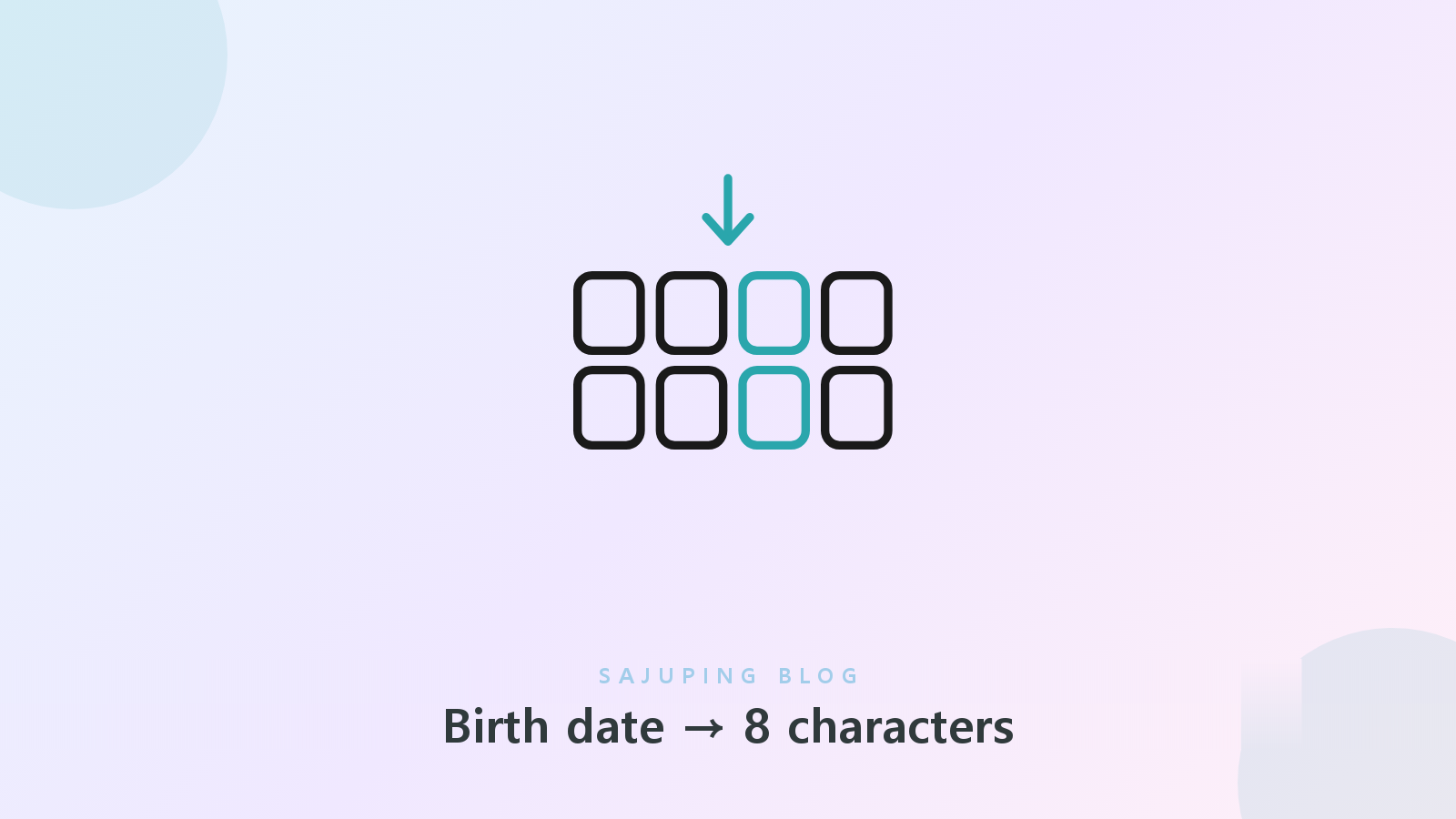
How the eight characters are made
Saju palja (four pillars, eight characters) is exactly what the name says: four pillars, eight characters.
- The pillar of your birth year: two characters. The zodiac animal sign people talk about comes from here.
- The pillar of your birth month: two characters. The energy of the season.
- The pillar of your birth day: two characters. The center of the whole chart. The upper character is the day master (you yourself); the lower character is the day branch (the seat you sit on).
- The pillar of your birth hour: two characters. The energy of the time of day.
The manseryeok is the table that does this conversion for you, and these days an app spits it out the moment you enter your birth date and time.
The most important character: finding your day master
Find your birth day in the manseryeok and you will see two characters for that day. The first one is your day master, the protagonist of your entire chart.
There are ten possible day masters: Gap (a great tree), Eul (flowers and vines), Byeong (the sun), Jeong (a candle flame), Mu (a mountain), Gi (an open field), Gyeong (raw iron), Sin (a polished gem), Im (the ocean), and Gye (gentle rain). Every saju interpretation, from personality and dating patterns to career luck and the flow of the day, unfolds from this one character. All that content saying “a Gap-wood day master is like this” is talking about exactly this character.
Three mistakes people make when reading it themselves
First, solar-term boundaries. In saju, the year and month do not change on January 1; they change at the solar terms. The year turns at Ipchun (the start of spring, in early February), and each month turns on its solar-term entry day. If you were born before Ipchun but calculate with the new year’s energy, all eight characters come out wrong.
Second, the 11 p.m. trap. The saju day begins at the Ja hour, 11 p.m. If you were born after 11 p.m., the date may be handled differently, so if that is you, use a manseryeok that supports this calculation.
Third, correcting the birth hour. If your birth time is uncertain, the hour pillar becomes shaky. If you do not know it, the honest approach is to read with six characters, and even that is plenty for a day-master-centered interpretation.

Do this before visiting a fortune-teller
Use the manseryeok to check your eight characters and your day master in advance, and boil what you are curious about down to three questions. “How does this year look?” is fine, but “I am thinking about changing jobs; is this year a flow where I can make a move?” produces an overwhelmingly better consultation.
A sense of cost helps too. An in-person reading at a fortune-telling office runs tens of thousands of won (₩) per session and requires an appointment. A manseryeok-based AI consultation starts instantly, whether at dawn or on your commute, and at a far lighter cost. The two are not substitutes so much as a sequence: sort out your chart and your questions with an app, then add depth with an in-person reading if you need it.
Frequently asked questions (FAQ)
Q. Where can I see a free manseryeok? Search “free manseryeok” on any portal and several services come up. Whichever you use, what matters is checking that it handles solar terms and late-night births correctly. Sajuping also builds your chart for free, based on the manseryeok.
Q. Should I enter my lunar-calendar birthday? Follow the input convention of the service you use. Most default to the solar (Gregorian) calendar, and if you only know your lunar birthday, use the conversion option. If you were born in a leap month, you must mark the leap-month status as well.
Q. What is the Cheoneul-gwiin that appears in the manseryeok? It is the noble-helper star: it marks the positions where a helping energy attaches, determined by your day master. Manseryeok apps label these special stars automatically, but rather than reacting to each one, we recommend first understanding the big structure of your day master and eight characters.
Everything about reading the manseryeok comes down to one thing: knowing your day master. Once you have that one character, saju consultations, saju content, and the flow of your day all snap into higher resolution.
Curious about your eight characters and your day master? You can check them in under a minute on Sajuping (sajuping.ai), a manseryeok-based AI saju consultation app. It is also a great thing to look at before booking an in-person reading.