
Stem harmony (天干合) is the rule by which the ten heavenly energies attract one another in five pairs. The interesting part is the makeup of the pairs. When two stems that stand in a controlling relationship, with opposite polarity, meet, they attract instead of repelling. The axe that fells the tree and the tree, the water that puts out the fire and the fire: in a specific combination they become partners rather than enemies. For the old question “why am I drawn to the person who is my exact opposite?”, these five pairs are the answer saju keeps ready.
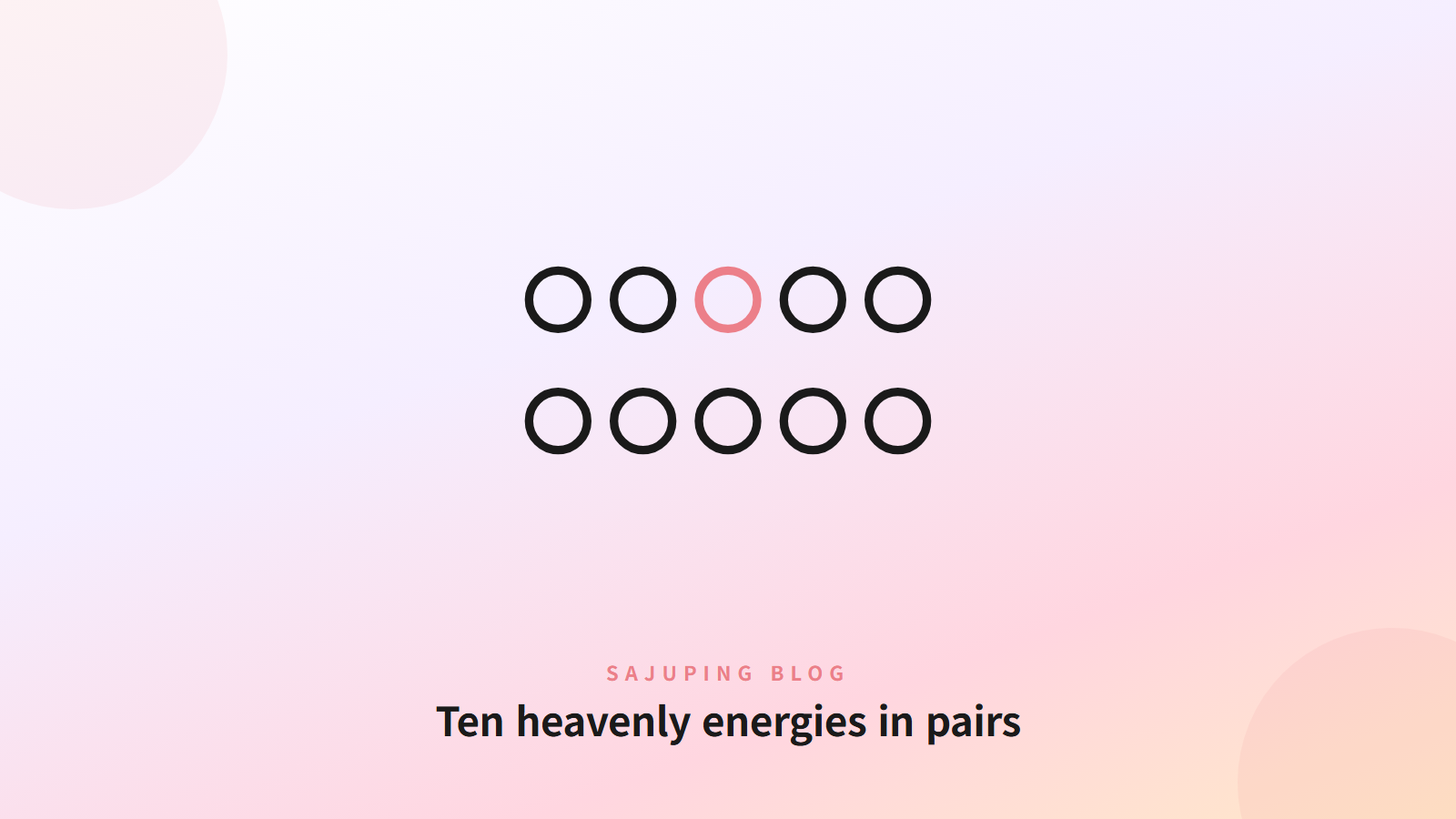
The five harmonies — the rule by which ten energies find their pairs
The ten stems are Gap and Eul (Wood), Byeong and Jeong (Fire), Mu and Gi (Earth), Gyeong and Sin (Metal), Im and Gye (Water). Five pairs among them form harmonies.
- Gap-Gi harmony — the great tree (Gap) and the soft soil (Gi)
- Eul-Gyeong harmony — the vine-like tree (Eul) and the hard metal (Gyeong)
- Byeong-Sin harmony — the fire of the sun (Byeong) and the cut gem (Sin)
- Jeong-Im harmony — the candle flame (Jeong) and the great water (Im)
- Mu-Gye harmony — the great mountain’s earth (Mu) and the dew-like water (Gye)
The rule is one: you harmonize with the sixth stem from your own, the character of opposite polarity within the element you control. All five pairs, no exceptions.
The grain of the five pairs — same harmony, different shapes of relationship
Even within stem harmony, the shape of the relationship differs by the character of the pair. The tradition gave each of the five a name.
- Gap-Gi — the harmony of balance (中正之合): a straight tree rooting in generous ground. A relationship centered on trust and stability. The most even-tempered and lasting of the five, but with little stimulation, boredom can become the task.
- Eul-Gyeong — the harmony of benevolence and righteousness (仁義之合): a soft vine wrapping around hard metal. One leans and one supports, so the roles are clear. Swapping roles now and then so the supporting side does not tire is this harmony’s manual.
- Byeong-Sin — the harmony of authority (威制之合): the sun shining on a gem. A relationship in which each makes the other shine, outwardly glamorous and socially well matched. But both have strong pride, so a quiet contest of wills can go on underneath.
- Jeong-Im — the harmony of benevolence and long life (仁壽之合): a small flame reflected on great water. The harmony with the highest emotional density, with an intense, romantic first attraction. The emotional swings are just as large, so building a practical foundation outside the relationship matters. (Some classical sources call it the harmony of indulgence, 淫慝之合.)
- Mu-Gye — the harmony without sentiment (無情之合): the great mountain and the dew. As the name suggests, little emotional expression and a practical relationship. Not hot, but a practical fit that lasts, and with one spoonful of expression the most comfortable pairing of all.
Knowing which of these pairs your day master and the other person’s form shows not only “why we’re drawn” but “where this relationship is comfortable and where it tires.”
Why harmonize with the very one that controls you?
Translated into the language of the ten gods, the identity of these combinations appears. For a yang stem, the partner in harmony is the direct wealth star, the one you cherish and handle; for a yin stem, the direct authority star, the one that keeps you upright. Exactly the relationship the tradition read as the seat of the spouse. Not the partner who leaves you as you are, but the one who collides with you and refines you — stem harmony is that attraction set down in five lines of grammar. It is also why bonds with someone who is your exact opposite often last longer than with someone similar.
Reading stem harmony in your chart and your year
Harmony within the natal chart. If your day master harmonizes with a neighboring stem, you have a grain of being strongly bound to the connection or role in that seat. Harmony with the month stem binds the heart to work and parents; with the hour stem, to children and later-life plans. People whose day master is already in harmony are generally relationship-oriented and steadier with a partner than alone.
Harmony arriving through the cycle. A year when the stem of the ten-year or annual cycle harmonizes with your day master is a period when connections, contracts, and affiliations are easily formed. Marriages and new jobs tend to cluster in such years. But binding is both absorption and constraint, so it is worth knowing that judgment tilts toward the relationship in this period. The stem of 2027 Jeong-mi is Jeong Fire, so for an Im Water day master, next year is a year the Jeong-Im harmony arrives.
For reference, the two harmonized characters changing entirely into another element is called transformation (合化), and its conditions are strict enough that it is rare in practice. At an introductory level, “harmony means binding to each other” is enough.
How to read common situations — consultations
“I’m Gap Wood and my boyfriend is Gi Earth. Gap-Gi harmony, so can we marry?” Gap-Gi is the steadiest grain of the five, a welcome marker in marriage compatibility. But stem harmony is the attraction of hearts; the grain of daily life is set by the branches. If your two day branches clash, it is a pairing where the hearts match but the rhythms of life differ, and agreeing on that in advance is the wedding preparation. Accurate compatibility does not conclude from stem harmony alone.
“They say a harmony enters my day master this year, but I haven’t met anyone.” The “connection” of a harmony year is not only romance. It is any event of being bound to something: a new job, a contract, a partnership, a membership. If you had a new workplace or a new contract this year, that was the harmony’s event. And since harmony has the grain of absorption, a year spent deeply absorbed in something, even without a connection, is itself the feel of harmony.
“I was told my day master is already in harmony within my chart. What does that mean?” A day master in harmony in the natal chart means “someone who is steady with a partner.” You find time alone hard to bear and give a lot of yourself to relationships or organizations. When a new harmony arrives through the cycle, it competes with the existing one, so it can become a year of being torn between two relationships. Knowing this, you can step back and see that “what my heart is drawn to right now is the cycle at work.”
Frequently asked questions
Q. If compatibility shows a stem harmony, are we a good match? When two day masters harmonize, the first attraction is strong and the relationship tends to deepen quickly. But attraction and endurance are different matters, so full compatibility also looks at the relationship of the branches and the balance of elements. The five names above give a sense of what kind of attraction it is.
Q. How does stem harmony differ from branch harmony? If stem harmony is attraction at the level of heart and will, the six harmonies and triads of the branches are closer to binding at the level of daily life and environment. The distinction between outer and inner compatibility roughly comes from this difference of layer. Stem harmony alone means hearts meet but life misaligns; branch harmony alone means life is comfortable but the spark is faint.
Q. I heard that a day master in harmony loses itself? Read it as: in a period when a harmony arrives at the day master, it is easy to lose your own pace through absorption in a relationship or an organization. Not losing but leaning, so knowing it, you can adjust. If you sign a big contract or marry in this period, passing the judgment through a third party’s eyes once is a practical supplement.
In closing
Stem harmony is an old observation that attraction is not random but follows a grammar. The heart going to the one who refines you: it is interesting that a rule a thousand years old is not so different from today’s relationship counseling.
If you want to know which character your day master harmonizes with, and whether this is a year connections bind, check it in Sajuping (sajuping.ai), an AI saju companion built on manseryeok calculation.